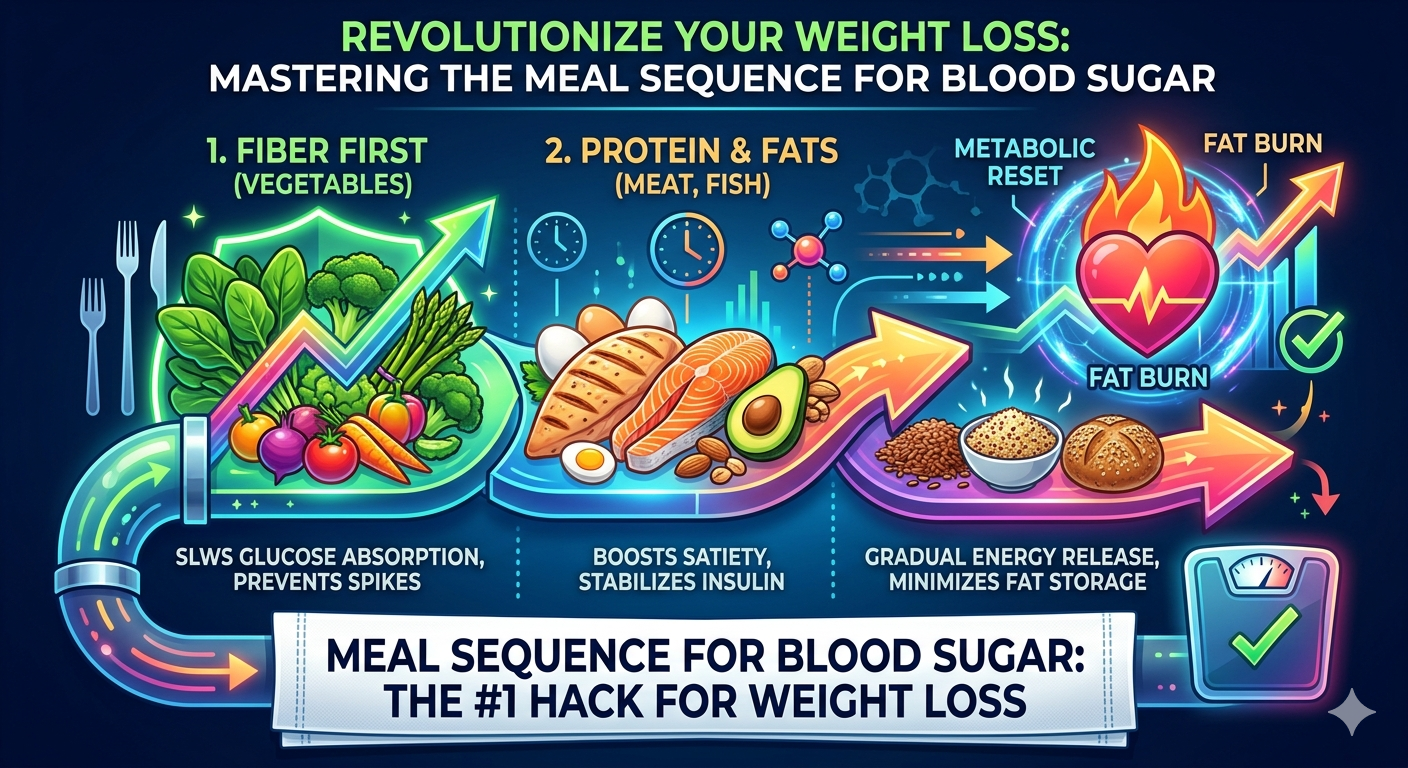

Revolutionize Your Weight Loss: Mastering the Meal Sequence for Blood Sugar
When it comes to effective and sustainable weight loss, the discussion usually revolves around what to eat. However, an increasing body of scientific evidence suggests that how we eat—specifically, the meal sequence for blood sugar—might be the missing piece of the puzzle. By strategically ordering your food, you can create a metabolic environment that favors fat burning over fat storage.
The Science Behind the Sequence: Flattening the Glucose Curve
The primary goal of managing your meal order is to prevent rapid blood sugar spikes. When you consume carbohydrates, especially refined sugars and starches, they are quickly broken down into glucose, causing a sharp rise in blood sugar levels.
In response, your pancreas releases insulin, the hormone responsible for moving glucose from the bloodstream into your cells. However, when glucose spikes, insulin also spikes. This high level of insulin signals your body to store excess energy as fat. Furthermore, the subsequent crash in blood sugar levels often triggers intense cravings, leading to a cycle of overeating. By optimizing the meal sequence, you can flatten this glucose curve and manage insulin effectively.
The Golden Sequence: A Step-by-Step Guide
To implement this metabolic hack, follow this simple, three-step meal sequence for blood sugar during your main meals:
1. Fiber First (The Protective Buffer)
Always begin your meal with non-starchy vegetables. Fiber (both soluble and insoluble) creates a viscous mesh in your small intestine. This layer slows down the emptying of the stomach and the absorption of glucose from any carbohydrates that follow.
- Examples: Spinach salad, steamed broccoli, roasted asparagus, bell peppers.
2. Protein and Healthy Fats Second (Satiety and Stability)
Once you’ve consumed your fiber buffer, move on to proteins and healthy fats. These macronutrients further slow digestion and induce the release of satiety hormones, making you feel full faster and for longer. This step is crucial for establishing long-term metabolic stability.
- Examples: Grilled chicken, salmon, eggs, tofu, avocado, nuts.
3. Carbohydrates Last (Energy and Enjoyment)
Save the starches and complex sugars (grains, fruits, root vegetables) for the very end of your meal. Because the fiber, protein, and fat are already in your digestive system, the glucose from these carbohydrates enters your bloodstream much more slowly, resulting in a significantly smaller and more stable insulin response.
- Examples: Brown rice, quinoa, sweet potato, whole-grain bread, an apple.
Key Takeaways for Sustainable Weight Loss
- You Don’t Have to Give Up Carbs: The key is to simply reorder them.
- Consistency is Crucial: Apply this meal sequence for blood sugar consistently to see significant, long-term results in your energy levels and body composition.
- Start Simple: If three steps seem daunting, start with “the veggies-first rule” and build from there.