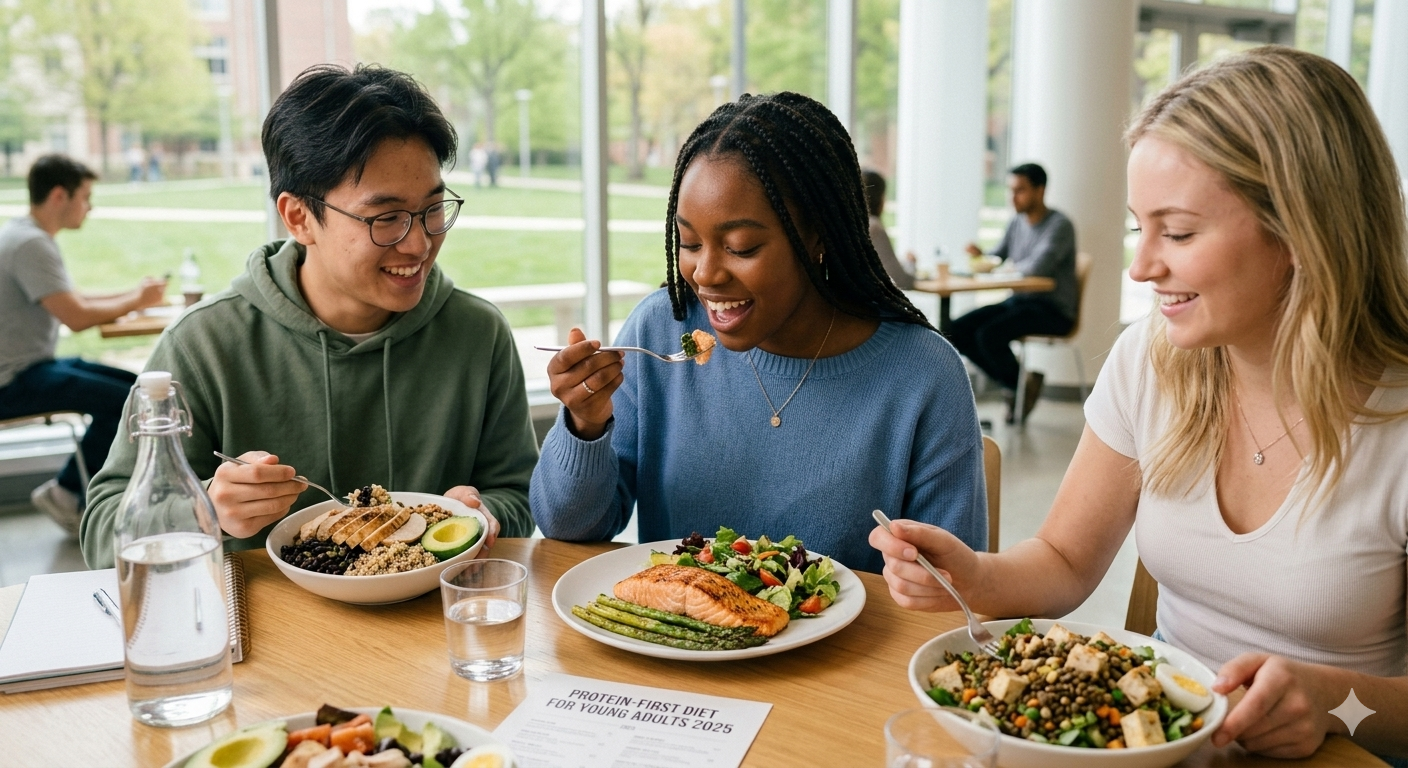

The Protein-First Diet: The #1 Weight Loss Hack Young Adults Are Using in 2025
No calorie counting. No starvation. Just one simple rule that rewires how your body burns fat — and it’s backed by science.
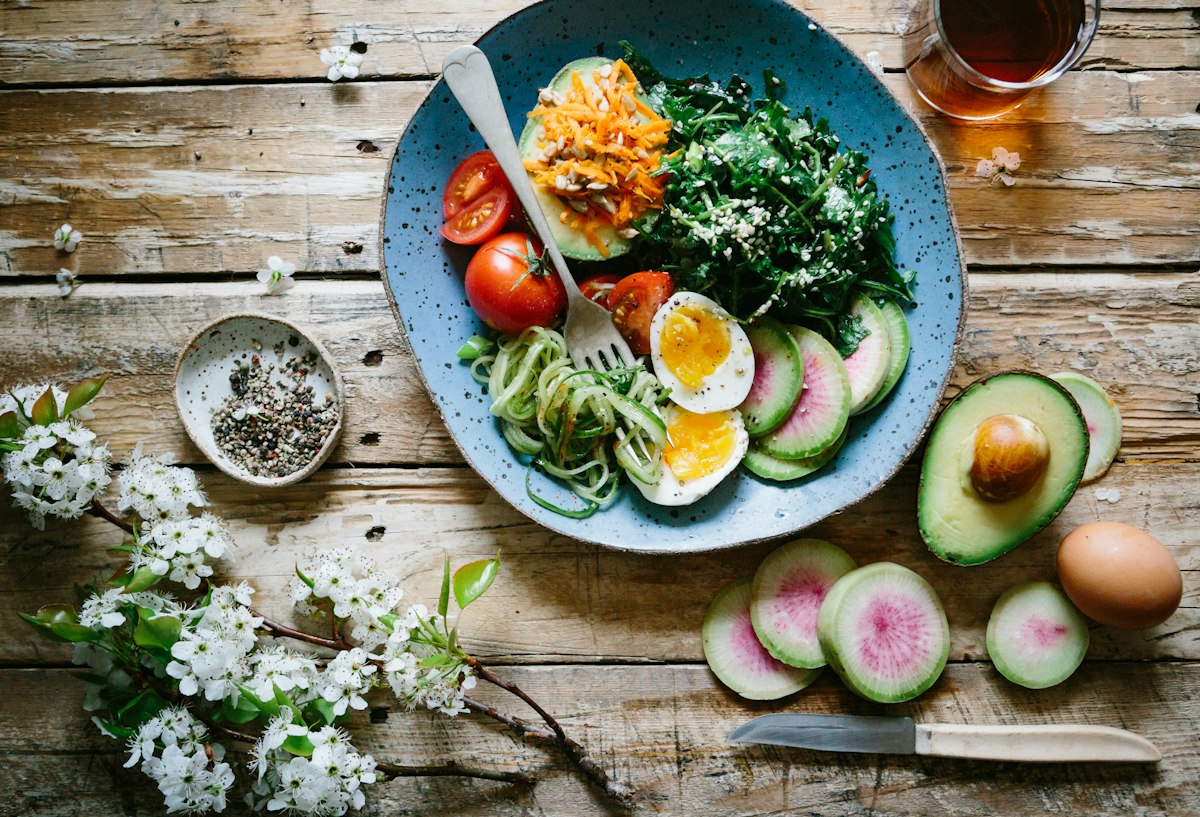
You’ve tried cutting carbs. You’ve downloaded three different calorie-tracking apps. You’ve probably stared at a salad and wondered why you’re still not seeing results. Sound familiar? If you’re a young adult who’s fed up with complicated diets that leave you tired, hungry, and demotivated — you’re not alone.
The protein-first diet is the method going absolutely viral in 2025, and for a very good reason: it’s stupid simple, it’s backed by real science, and thousands of people are reporting dramatic results without feeling like they’re on a diet at all. Let’s break down exactly what it is, why it works, and how you can start today.
What Is the Protein-First Diet?
The protein-first diet isn’t really a “diet” in the traditional sense — it’s a one-rule eating strategy: at every meal, eat your protein source first before touching anything else on your plate.
That’s it. Eat your chicken before your rice. Eat your eggs before your toast. Have your Greek yogurt before your granola. This single habit — eating protein first — triggers a cascade of hormonal responses that naturally reduces how much you eat overall, stabilizes your blood sugar, and keeps you feeling full for hours.
The Science: Why It Actually Works
This isn’t just a TikTok trend. The protein-first approach has serious scientific backing. Here’s what happens inside your body when you eat protein first:
🔬 The Hormone Connection
When you eat protein first, your gut releases powerful satiety hormones — specifically GLP-1 (glucagon-like peptide-1) and PYY (peptide YY). These are the same hormones that expensive weight-loss drugs like Ozempic try to mimic artificially. Protein activates them naturally.
At the same time, protein helps keep your blood glucose stable. By the time carbs arrive in your digestive system, the glucose spike is blunted — meaning less insulin, less fat storage, and fewer cravings an hour later.
How to Start: Your Step-by-Step Guide

Set Your Protein Target
Aim for 0.7–1g of protein per pound of body weight per day. For a 150 lb person, that’s 105–150g daily. Use a free app like Cronometer to track for the first week.
Build Every Meal Around a Protein Anchor
Before planning your meal, ask: “What’s my protein here?” Eggs, chicken, fish, Greek yogurt, tofu, cottage cheese — these are your anchors. Build the rest of the meal around them.
Eat Protein First, Always
When your plate is in front of you, take 3–5 bites of protein before touching anything else. This physically primes your gut for maximum satiety signaling.
Add a Protein Shake on Busy Days
When you can’t hit your protein target from whole foods, a high-quality whey or plant protein shake fills the gap fast. More on the best options below. ⬇
Track for 2 Weeks, Then Go on Autopilot
After 14 days of consciously tracking, most people internalize the habit. You’ll naturally start selecting high-protein options without overthinking it.
Best Protein Sources (+ Top Picks on Amazon)
Whole-food proteins are always the foundation, but supplements make hitting your target realistic for busy young adults. Here are the top options our community swears by — all available on Amazon:



* As an Amazon Associate, we earn from qualifying purchases. Prices and availability may vary.
🥗 Best Whole-Food Protein Sources
- Chicken breast — 31g protein per 100g, the gold standard
- Eggs — 6g each, cheap, fast, and endlessly versatile
- Greek yogurt (plain) — 15–18g per cup; great with berries
- Canned tuna or salmon — 25g per can, $1–2, no cooking needed
- Cottage cheese — underrated at 14g per half cup, great before bed
- Tofu / Tempeh — 15–19g per 100g for plant-based eaters
- Edamame — 17g per cup, perfect as a snack
Protein-First vs. Other Popular Diets
How does the protein-first method stack up against the diets you’ve probably already tried?
| Diet Method | Easy to Follow? | Preserves Muscle? | Reduces Cravings? | Sustainable? |
|---|---|---|---|---|
| Protein-First ✅ | ✓ Very Easy | ✓ Yes | ✓ Strong | ✓ Long-term |
| Keto / Low-Carb | ✗ Hard | ✓ Yes | ✓ Moderate | ✗ Often not |
| Calorie Counting | ✗ Exhausting | ✗ Depends | ✗ Weak | ✗ Burnout risk |
| Intermittent Fasting | ✓ Moderate | ✗ Risk if under-eating | ✓ Moderate | ✓ Moderate |
| Juice Cleanse | ✗ Miserable | ✗ No | ✗ No | ✗ Never |
Real Results: What Young Adults Are Saying

I’ve tried literally everything — keto, intermittent fasting, calorie cycling. The protein-first method is the only thing that didn’t make me feel crazy. I lost 12 lbs in 6 weeks without being obsessed with my food. I just… stopped being hungry all the time.

As a college student I don’t have time for complicated meal plans. Protein-first is just: eggs at breakfast, chicken at lunch, tuna at dinner — eat those first. I’ve lost 8 lbs in a month and I’m finally not snacking at midnight anymore.

5 Common Mistakes to Avoid
Ready to Start the Protein-First Diet?
Try it for just 7 days and notice the difference in your hunger, energy, and cravings. Drop a comment below sharing your experience — we’d love to hear your story!